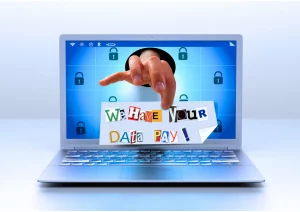


Imagine This Happened at Your Clinic
What if someone broke into your clinic every night, opened the cabinets, copied all your patients’ records — X-rays, ultrasounds, lab results — and walked out without a trace?
And the next morning, you continued seeing patients as usual. Nothing seemed off. Everything just as it was.
Until, one day, someone external contacts you:
“Your data is for sale. All of it.”
That’s exactly what happened recently in Argentina.
The criminal group D0T CUM — known for leaking and selling stolen data — put up for sale:
- 665,128 medical studies, including
- X-rays, ultrasounds, CT scans,
- clinical and lab results,
- and other sensitive documents containing personal data of both patients and healthcare professionals.
One medical software provider was hacked. That single incident exposed hundreds of thousands of clinical studies from dozens of private clinics and hospitals that used the platform daily.
And the most worrying part? Not just the scale of the breach — but how it was discovered.
A Case of Ransomware That Exposed Over 665,000 Medical Records
Who Was Behind the Attack?
The attack targeted a software called Informe Médico, used by more than 30 clinics, private hospitals and diagnostic centres in Argentina. It’s a fairly standard platform for managing imaging studies (X-rays, ultrasounds, CTs), clinical reports and other medical records.
In short, it acts as the central digital archive clinics use to operate day-to-day.
On April 4, 2025, a UK-based cyber intelligence firm, Birmingham Cyber Arms LTD, detected something suspicious. On a darknet forum, someone was selling over 665,000 medical records.
Clearly, we’re not talking about a random document or a small leak.
These were real clinical studies, complete with names, results, images — sensitive health data extracted straight from the very system those clinics rely on.
Days later, on April 15, INCIBE-CERT (Spain’s national cyber security agency) confirmed it: the provider had been breached, the data was exposed, and worst of all… the clinics had no idea.
Imagine someone robbing your clinic every night, undetected — and it takes a stranger to let you know.
Furthermore, what D0T CUM offered wasn’t just a warning. It was blackmail.
They put the data up for sale — which almost certainly means they first tried to extort the company. When the ransom wasn’t paid, they published the files as punishment.
This kind of non-encryption extortion attack is increasingly common. Criminals don’t even need to lock you out — they just copy your data and threaten to leak it.
By compromising the provider, the attackers created a ripple effect across every clinic using that software — private practices, diagnostic centres, hospitals. Anyone relying on the platform was affected.
Why No One Noticed — and Why That’s the Real Problem
None of the clinics involved spotted the breach.
There were no alerts, no system lockouts, no symptoms.
The data was quietly extracted over days — maybe weeks — without raising suspicion.
Why?
Because no one was watching.
So the big question is:
How is it possible that no one noticed?
- Who monitors system access?
- From where? At what time? Through which port?
- Does anyone check for strange midnight logins from foreign IPs?
In a physical clinic, a receptionist tracks who enters and leaves.
So why don’t we have someone — or something — doing the same in your systems?
After all, your digital systems have doors too.
And if no one’s guarding them, intruders can come in — and take what’s most sensitive.
This article isn’t here to scare you.
Rather, it’s here to help you understand what happened, why cyberattacks on private clinics are increasing, and what you can do to prevent them, even if you think you’ve “got everything covered.”
What Went Wrong?
Why Clinics Rarely Know How the Breach Happened
The exact cause of the attack hasn’t been confirmed.
Official reports don’t include technical details about how the attackers got in — or what went wrong. The only clue, reported via the media, is a strong hypothesis: a supply chain attack. In other words, the software provider was the main target, and through that single breach, all connected clinics were compromised.
But again, there’s no official confirmation.
And honestly, that’s a recurring problem in this sector.
When a cyberattack happens, rarely do we hear how. There’s no transparency about what vulnerability was exploited or which security measure failed. Crucial details are withheld — making it nearly impossible for other clinics to prepare themselves.
This lack of transparency only makes things worse, leaving other clinics just as exposed — but with no idea where the threat might come from.
A Likely Case of Supply Chain Attack
Even without full confirmation, multiple sources agree that the attack likely originated via the software provider. If that was indeed the entry point — and it’s a very reasonable assumption — then we’re talking about a supply chain attack.
What does that mean?
It means the attackers didn’t need to hack each clinic individually.
They breached the central system the clinics all relied on, giving them direct access to data managed by dozens of healthcare centres.
Think of it like this:
Instead of picking the lock on each individual office, the intruders found the back door to the building — the one every tenant uses.
And how did they likely pull it off?
Possibilities include:
- Vulnerabilities in the software itself (outdated versions, exposed services, insecure integrations)
- Stolen credentials
- Social engineering (phishing, impersonation)
Once inside, it was easy: extract the data, make copies, and start the extortion.
What’s most alarming?
None of the clinics noticed a thing.
There were no alerts, no warnings, no red flags about traffic patterns, access from unfamiliar IPs or strange login times.
This reveals a dangerous assumption: many clinics fully trust that the provider is watching everything for them.
But more often than not… they’re not.
If no one is monitoring system access, data movements, or unusual activity, attackers can do as they please — and you’ll only find out when it’s already too late.
Could the Same Type of Cyberattack Hit Your Private Clinic?
This isn’t a far-off problem.
It’s not “something that happened in Argentina” or “only relevant to big hospitals.”
These kinds of attacks can affect any clinic, even if you don’t have your own servers, your own IT department, or anything that seems “particularly critical” on the surface.
One Weak Spot Is Enough
Cyberattacks on private clinics don’t need advanced tech to do serious damage.
All they need is one poorly secured access point.
And ironically, that’s often the case in small or mid-sized private practices.
If you’re using third-party software — like most clinics do — and you assume that because it’s “cloud-based” it must be safe…
…then there’s a good chance you have no real visibility or control over what’s happening with your data.
And that’s a risk.
Many health professionals implicitly trust that their tech providers handle everything.
They assume that since the system isn’t managed directly by them, the risk isn’t either.
But that’s not true.
The risk is still yours.
If you’re not asking questions, if you’re not checking, if you’re not demanding specific security measures — then you have no real guarantees.
False Sense of Security in the Cloud
This incident makes one thing clear:
It’s not enough to buy a software platform and assume everything is covered.
If that system gets breached, attackers don’t need to access your network or crack your passwords.
They already have a way in — through the tool you use every day.
And if you’re not running at least basic oversight — who logs in, from where, when, with what permissions — you’ll find out late.
Or not at all.
That means you could be doing your job well, with good intentions, and still leave your patients exposed.
Not because you did anything wrong…
…but because no one ever taught you that this needs to be watched — and now you can’t afford not to.
What You Can Do to Prevent Cyberattacks on Private Clinics
This attack offers valuable lessons — and warnings — that no clinic should ignore.
Here are some of the most urgent takeaways:
1. You Can’t Protect What You Don’t Monitor
None of the affected clinics detected the breach. No alerts. No symptoms.
The data was silently taken — undisturbed.
That should tell you one thing loud and clear:
If you don’t know what’s happening in your systems, you can’t protect them.
And if you can’t protect them, you can’t guarantee your patients’ privacy.
2. Your Provider’s Security Is Your Problem Too
When you outsource essential services (like managing medical studies) to a third party, you’re not just handing over functionality.
You’re sharing the risk.
This incident proves that clearly:
One weak point in the provider affected every clinic that trusted them.
And many of those clinics probably had no idea what security measures were in place.
You don’t need to be a cyber expert — but you do need to ask direct questions:
- Who has access to my data?
- How is it protected?
- What happens if there’s a breach?
Five Things You Can Start Doing Today
🔐 Limit access.
Not everyone needs to see everything. Each user should only access what’s needed for their role.
🔔 Enable alerts.
Many platforms let you activate notifications for unusual access — odd hours, foreign logins, etc. If your provider allows it, use it.
🩺 Monitor everything.
Just like you track a patient’s vital signs, you need to monitor your systems. Who’s logging in, from where, doing what.
📊 Ask for activity reports.
Even if you’re not technical, request summaries of system access. If something looks odd, follow it up.
🧭 Have a basic incident plan.
If your data is compromised tomorrow — what’s your next move? Who do you call? How do you notify patients?
Having a basic plan beats improvising in crisis mode.
Monitoring isn’t optional anymore.
It’s a word your clinic needs to take seriously.
Final Thought: Don’t Leave the Door Wide Open — Digitally
Take a moment to think:
- If someone accessed your clinical data today — without your knowledge — how would you find out?
- If a patient asked, “Is my information secure here?”, what would you say?
- And if you discovered that patient files, test results, and reports had been silently stolen…
What part of your reputation, your trust, or your professional integrity would be at stake?
This isn’t about fear.
It’s about accepting that if you manage health data, you carry a serious responsibility.
You can’t delegate it entirely.
You can’t ignore it.
You can’t postpone it.
And no, you don’t need to be technical.
But just imagine — if tomorrow, everything that keeps your clinic running vanished: internal protocols, confidential files, patient records, team data…
That’s exactly what happened to a U.S. provider not long ago.
So ask yourself:
How am I protecting the most sensitive part of my clinic from cyberattacks on private clinics?
And remember:
Lock your doors — and your ports.
Stay cyber-safe.